Social Icons

Tuesday, February 12, 2013

Building The Client / Trainer Relationship


Building The Client / Trainer Relationship


Ami- Hodge , Fitness Coach 


We all know to call a doctor when we’re feeling sick or if we get hurt.  When we have a problem with our car, we don’t hesitate calling a mechanic.  But, what about when you want help losing weight and want to get in shape?  The answer isn’t always as simple as it should be.  Suddenly, we’re faced with a myriad of options.  Countless ads jump out at us for various weight loss programs, gadgets, diets or DVDs that are sure to give us rock solid glutes.  


It can be pretty confusing if you’re not sure where to start.   Many times people turn to a fitness professional to point them in the right direction.  But again, how do you know you have found the right person for the job?  Finding the right trainer can be a challenge but what happens once you’ve found the right one matters just as much.


Just Because His Shirt Says “Personal Trainer” Doesn’t Mean He’s Qualified


My first experience as a fitness coach was at a popular box gym.  I was really excited to get my career going even though I knew it would be competitive and I still had a lot of learning to do given my lack of experience.  While I was given some practical and useful advice from my director, what I observed amongst my fellow trainers was nothing short of shocking.  These people were self-proclaimed professionals, however the way they treated their clients was anything but.  Clients were often instructed to do advanced exercises that were unsafe and served little purpose other than to cause over exertion.   The main philosophy was to “make ‘em sweat” and if a client could barely put their jacket on or walk out the door, they had a successful workout. 

 Needless to say, I felt like something was really wrong.  I know that sounds like a logical thing for me to think and while my situation was an extreme case, it is a common story all across the fitness industry.  It’s no wonder people are intimidated by hiring a trainer.


I am here to tell you that this should never happen to anyone.  But just like finding out you purchased and brought home a rotten apple from your local grocery store, so too can you inadvertently find yourself in the hands of an “uninformed” personal trainer. 


A genuinely good coach takes time to get to know their client. He or she discusses possible limitations with their clients, takes the time to follow up on their clients’ goals or revisits their initial assessment.   


They will even work with your doctor if you have been diagnosed with a serious injury or ailment.  If a trainer does not regularly take the time to do these things, then he or she is truly “uninformed” of who their client is.  In addition to understanding his or her client, a quality trainer will be constantly learning and staying informed by keeping up to date on the latest research in the fitness industry.  He or she should apply that information to his or her clientele’s particular exercises programs.


The good news is that there ARE trainers like this out there.  The best way to locate one is not necessarily through a flashy advertisement but through referrals.  If you talk to someone who is happy with his or her results and is enthusiastic about helping their trainer build their business, you know you have an ideal lead. 


 The Path Is In Front Of You, Now It’s Up To You To See Where It Leads


Once you find a coach you trust and feel confident will lead you to your fitness goals, it’s up to you to stay on track and work with the plan that has been set before you.


Your trainer has the tools but there are of no use if you don’t use them.   Every time you walk in the door to your gym or when your trainer arrives at your home, that is when the distance between you and your goals gets a little smaller.  The path you’re on will be challenging and at times may seem impossible.  


Your trainer or coach is the one that will help you get through those rough spots and keep you headed in the right direction.  Pushing through difficult exercises or conquering barriers when it comes to food are what will propel you forward.  This is going to sound harsh but if you are not willing to make these efforts, the point of working with a personal trainer is useless.   Not only will you have wasted a solid investment of money, you will end up no better off than you were when you first met with your trainer.  Or worse, you may feel like you’ve failed yourself. Your trainer is going to be accountable to you but it’s not their goal that is being fulfilled. 


The other good news is you have the power to stay on track.  After all, what led you to finding the right trainer is what is going to lead you to fitness success.  When you walk through the door to your gym you have taken one step closer to getting better!


To get started on your path, come visit Terra Nova Fitness at www.terranovafitness.com or call 650.359.9002 and we will show you the way!


Tuesday, January 29, 2013

BEWARE of the Personal training cookie cutter monster:


BEWARE of the Personal training cookie cutter monster:
Achieve your fitness goals faster!

Chris Shah
Owner, Fitness Coach

(Note * all pics are of REAL TNF clients)

Want to fit into those skinny jeans, look awesome in that bikini, out condition your team mates, finish that marathon quicker?

Does your personal trainer give everyone the same exercise program, delivery, (coaching cue) dosage of intensity, duration and frequency?  If so you may be getting trained by a personal training COOKIE CUTTER MONSTER!

  (Figure 1)


We are all individuals with different training ages, current states of function and capacity as well different specific health and fitness destinations.

The principles of Strength and conditioning are for the most part universal but there application is just as much artistry as it is science.

It’s the GREY area that most of us self reflected personal trainers are so fascinated by.


 CLICK THIS VIDEO NOW FOR A EXPLANATION! 


Imagine a doctor’s waiting room office. Everyone in the office is sick and has the same goal of wanting to feel better. The doctor walks in as announces “you have come to the right place to feel better I’m giving all of you the same medicine and dosage”  “It’s the medicine of the day. MOD!

  (Figure 2)


Outrageous! The doctor would get disbarred immediately.

 (Figure 3)


Sadly this happens all the time in the fitness community. It comes down to lack of proper education, mentoring, and just plain laziness.

We can view exercise and movement as a physical medicine it elites reactions in the individual.  

In the medical profession there is a base level of competence. Specifically the administration of Medicine has certain rights or rules. 

Lets use these rights and rules to help elevate what I find sacred (being a fitness professional) to the same level of scrutiny of a well respected profession.  


The 8 rights of medication administration are:
·         The right client
·         The right time
·         The right drug
·         Does it cause pain?
·         The right route
·         Right dose
·         Right response
·         Right documentation

The 8 rights/rules of exercise administration

· Right client/athlete
Does the exercise program fit the needs and wants of the client/athlete? Do an assessment to decide the right program for the person.


  (Figure 4)

 
 Right phase
Does the exercise program have a strong fundamental foundation and bring the client or athlete along in progressive and safe manner?


(Figure 5)
 

Right exercise/movement
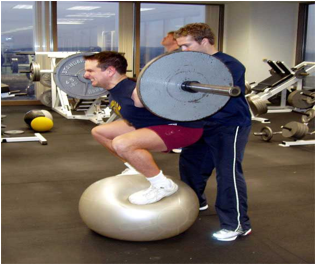
Are the exercise and or movement in alignment with client’s goals, level of current function? Not all exercises are appropriate for all clients.


(Figure 6)
 
 Does it cause pain?
Are you following the Hippocratic and wise legal practice of causing NO harm?
Again we must screen for red flags and pain.


·        


(Figure 7) 


 Right alignment/muscle firing sequence
Is the correct body position, lifting form, breathing mechanics and correct muscles firing in sequence? Any altered movement mechanics?


(Figure 8)

 ·Right volume/load
Are you giving the appropriate dosage of duration, intensity or load?


(Figure 9)

Right response
Are the prescribed movements, exercises, intensity and durations giving you the appropriate responses? Are there any adverse responses? Do you know the acute, short, medium and long term responses? 


 (Figure 10)
 
Right documentation
If it’s not written down it did not happen. Where is the diagnosis chart? Where are the notes on responses and the characteristics of the individual?


 (Figure 11)


 Why should you care?


(Figure 12)

You have specific goals and a specific body that operates and functions like a car.


TAKE HOME MESSAGE!

Don’t accept a cookie cutter point in somewhat the direction toward your fitness goals.
Get a fitness program BUILT AROUND YOU with specific directions to get to your fitness goals quicker and safer.


Saturday, January 19, 2013

Friday, January 11, 2013

Find and release the breaks to Ultimate performance -Part 1


Find and release the breaks:
To Ultimate performance- Part 1


Chris Shah
Owner, Fitness Coach


You want to run a half marathon, do your first amateur MMA fight, boxing match or Tuff Mudder obstacle course.

First things first is to push on the gas pedal speeding to your goal right? On the surface it seems like the right plan of action.

Imagine the excitement of planning a cross country road trip with your friends or family. Everyone wants to hurry up and get on the road. But not so fast!


(Figure: 1)
 
Will our car make the trip without breaking down?
Do we have enough money for the trip?
How much gas will we need?

These are what we call logistical breaks. They make you stop and think before you take a course of action. What is the limiting factor in making this awesome trip come true?

Similarly, we have breaks physically that we may not be aware of that hinder us from hitting top speed towards our final physical destination or goal.


Physical therapist and strength coach Gray Cook calls this the Eye of the storm. 


 (figure: 2)


What limitation break do you have that needs to be released in order to maximize your training program?

Muscle tone
Flexibility
Mobility
Stability

Strength
Power
Endurance
Skill

Any limitation of the first group will limit your ability to efficiently steer and control the second group. Also lots of research clearly shows us the possibility of injury or breakdown increases with such limitations.


CLICK HERE FOR A VIDEO EXPLANATION ...........


To better illustrate this point and why one workout routine will not produce the same results with another person I introduce you to the Optimum performance pyramids.


The Optimum pyramid (figure: 3):  The athlete has a nice wide base of functional movement.

This athlete has optimum mobility and stability to control and steer their power, endurance and skill.  


 (Figure: 3)


The over-powered pyramid (Figure: 4): The athlete does not have adequate Functional movement (mobility and stability) to optimal control and steer their power, endurance and skill. They have breaks on.


(Figure: 4)

Who cares? If you care about longevity, injury and optimum performance you will.
Without a nice wide base of mobility and stability your injury or breakdown potential greatly increases.

When you have a narrow base of functional movement you have to exert more energy as well as waste more energy. That means MORE physical exertion and LESS strength, power and conditioning capability. 
 
One fitness program will not get the same results with two different people who exhibit different performance pyramids and needs. 

When someone has breaks on it’s like those old school light bulbs. (Figure: 5) They light up your room but they are not efficient and run up your energy bill. Your exercising but it takes more physical exertion and your not maximizing strength and power.


 (Figure: 5)


BUT! …………………………


The new more efficient light bulbs (Figure: 6) do the job even better and are far more energy and money efficient. We want to find and release the breaks. That means more efficient power and strength with less effort.


  (Figure: 6)


Our bodies operate in very much the same manner. It’s what separates a good runner from an elite runner.

The best runners are very efficient and the runners with breaks on (limitations in mobility, stability) are leaking energy like a water hose with a hole. (Figure: 7) That means less energy or force being pushed into the ground along with slower run times and more physical exertion.


 (Figure: 7)


Do you work harder or get better want to, hmm?


TAKE HOME MESSAGE ..........
 Combine pushing on the gas pedal and finding and releasing the breaks.


http://www.terranovafitness.com/contact.html 


In part 2-

of the series I will go over specific examples with Runners, Boxers, Grapplers and the weekend warrior and common fixes I use to release the breaks...


Friday, May 18, 2012

Power training: A senior’s best friend.


Chris Shah – Terra Nova Fitness, Strength Coach

Power can be define as “the time rate of doing work” Essentially getting something done as quickly as possible.  

A woman walks in Terra Nova fitness observing a few fighters working on power development. She instinctively asks “do you train woman ?”  I smile “we actually train more woman than men.”

 Similar scene this time a guy walks in an observes s a 73 year and 64 year old woman working power development and asks “do you only work with woman?”

Power development is essential for all sexes and phases of our life. For each phase of our life the thought process or justification is slightly different.

 For athletes usually the fastest (among other qualities) has the competitive advantage so of course properly progressed power development is a main stay of our programming.

For the youth athlete power is a must for the long term athletic development. Speed kills and wins in competitive on field sports.

 We have both slow twitch muscle (endurance) and fast twitch (power) muscles.

Youth also have transitional muscle fibers that can be influenced to go one way or the other. Depending on what stimulus the muscles are exposed too. We want our kids developing transitional fibers to fast twitch (power muscles) for there on field sports.

But if power is usually thought of as athletic development why in the world would you program power for the senior client?  With each passing year we lose power development and/or our ability to react quickly.

We have all heard of the stories of a senior falling and breaking their hip. We talk about and blame weak hips, and osteoporosis. Don’t get me wrong they also deserve some of the blame as well. But it all started with a fall remember?

Why couldn’t they prevent the fall? They lacked power and/or the ability to quickly react to prevent the fall. With seniors power development means fall prevention.

 Training seniors and not working on there power development is like investing your money with out contingency plans. Plain FOOLISH!

I know what you’re thinking power training and seniors sounds intimidating. Here is the comforting thing; power is relative to the individual. You just have to move at a speed or velocity quicker than they are accustomed to. It’s been our overwhelming experience that seniors really enjoy the power training part of there fitness program.


Here are a few phase 1 power development exercises that are usually appropriate unless your assessment and/or screen deems them contraindicated.  (Special thank to Ernie who is 70 years young in these videos)


Mball overhead slams


Mball chest pass


Box jumps

Volume or foot contacts- Very low, no more than 15-30 foot contacts per foot per week for first 3 weeks.

Phase 1 regardless of population is all about mastering landing mechanics
Most injuries happen not on take off but on landing. Start as low as possible with jump height. Someone in this population might not have jumped in 40 years.

Each height we go through for 2-4 weeks for senior population.

Height Phase 1- ( 2-3" Take off)
Height Phase 1-  (2-3" landing)


Height  phase 2- (3-6") Take off
Height phase 2- (3-6") land


Height phase 3- (6-9") Take off
Height phase 3- (6-9") Land


Ladder (note: for my athletes I would consider this more agility or dynamic warm up)
Power can be relative for the population. We simple want seniors to move at a faster velocity that they are accustomed to.


Thursday, April 19, 2012

An Interview with Chris Shah

An old interview I did in 2010. Yes I have changed some things since then:)

Originally posted at All things strength

Saturday, April 3, 2010


An Interview with Chris Shah 


Chris Shah


1. Chris thank for your time. Could you give my readers your background, and how you came to be strength and conditioning coach?
I was always involved in some competitive sport especially middle distance track. Funny considering I’m not a fan of long distance anymore. I started out like many training my friend’s not knowing at the time I had no principles or methodology guiding me.

About 6 years ago I sustained a reoccurring injury to my left pectoral. I had severe sharp pain that would appear out of the blue.

I bounced around like ping-pong from so-called expert to expert with no relieve in sight. I had every image and evaluation done to me. Or so I thought. After 6 months on the shelf and many alternative methods of healing with little relief in sight. I vowed I would find a solution to my problem so I hit the library.

Immediately I fell in love with learning about the human body and performance training. I soon realized how truly naïve I was in training and had no one to blame for my injury but myself. I started to get all the industry standard certifications (I’m originally a computer science major) and started again to train friends. The friends I trained encouraged me to actually become a trainer. So I took the plunge and started out as an independent trainer bouncing around different studios for a couple of years. I finally found a long time home with my current gym for the past three years. We recently changed our name and I became a partner/owner.

2. What, in your opinion, is the biggest problem you see within the fitness industry today?
The EGO which builds a self imposed prison stumping their growth and in the process short changing their clients and athletes. Most coaches/trainers are on the independent hype which leaves them content with having their head in the sand. . I love Coach Boyle’s term “Fitness Ostridge” Here is a video blog describing how to spot one. http://www.youtube.com/watch?v=vJHKhtpeQ7U

I wish that the habit of interdependence would be valued more. I much rather know I’m wrong than think I’m right. If I know I’m wrong I can remedy the issue. I have been wrong many times and always enjoy learning why and how I was wrong. The only way to know such things is through the habit of egoless interdependence.

3. What is it like to own and run your own facility?
It is both exciting and scary at the same time. The exciting part is that any thought I have I can immediately play with; it’s my own personal fitness playground. The scary part is that the success of the gym is your responsibility and the weight on your shoulders can strain you if you don’t have a clear path of where you are going. I really underestimated how important the business side of things are. My business related books will shortly share the same amount of book shelf as training and personal development. It is very important to sit aside time to work on your business. You can be the best trainer in the world but at the end of the day you are running a business for profit. The buck stops with both my partner and I. The atmosphere and clients/athletes attitude to each other and to new clients/athletes is a direct reflection of our attitudes. People usually go to three places in a day 1) home 2) work and 3) another place. I want my gym to be the third place where they feel like their home and forget about the world for one hour.


4. You train a lot of MMA fighters. Described what it is like to train this population?I will go over generalities as this question in its self could be an entire interview. It is a challenge inherent with certain politics and egotistical mind sets. The guys that train their skill work at my gym have completely bought in to my training. It is like recess working with these guys. I also train BJJ when I have the time so I’m able to speak and translate fighting langue to my training program. The challenge lies with fighters who perform their skill work at other gyms but cross train their strength and conditioning work with me. I have to compete with their skill coaches trying to wear my hat. Generally hard or suffering training is equated with effective training.

Also the concept of “durability” or injury reduction is as foreign a concept as trigonometry to most fighters. I have a video blog on this very issue. http://www.youtube.com/watch?v=1ruXZS-M8A0
The skill training is inherently ripe for injuries as most of them always have some type of acute trauma based injury that simply by the nature of the sport cannot be avoided. My number one job is to keep them healthy so they can actually compete.

The potential for overtraining is very high for MMA athletes most will train x2 a day in different skill disciplines anywhere from 4-6 days a week. Add on top of that 2-3 days of strength and conditioning work with me. The cumulative fatigue must constantly be monitored. ( I have a system in place) If I have a very high-NSD work or complex training programmed for the day but the athlete for example has bruised up legs from sparring and generally fatigued I have to pull back accordingly. I want NSD work performed at or near full capacity without fatigue. Although their may be certain situations where I purposely overreach them then pull back for a super compensation effect.

Just as the mix martial artists must be diversified in his or her skill set I concurrently want all his or her strength and conditioning qualities to rise. Certain qualities will be stressed closer to fight time like the so-called power endurance quality. I see many MMA strength coaches who use a linear periodization model neglecting certain qualities for up to 4 weeks. This makes as much sense as neglecting a certain skill aspect for 4 weeks or one of your kids.
5. Who has had the biggest influence on you as a coach?

I consider Mike Boyle my mentor. I spent 5 days with him this past year and was enriched by the experience both as a coach and person. He has been responsible for a few paradigm shifts with my training. With every single thing I program or coach I always think how would I justify this to mike? What is the thought process?

Mike Boyle

Gray cook has also had a huge influence for taking complex issues like durability and quality of movement and simplifying them. I had a short discussion with Gray about fighting and he laid a great one liner on me regarding the FMS “1’s give your opponent more submissions and 3’s make you slippery in MMA/BJJ”

Gray Cook

6. Sometimes there seems to be a huge gap between some physical therapists and strength and conditioning coaches. How in your opinion can this gap be bridge?
We both want the same thing reduction of pain and increased durability. Most of the time the PT and S&C are talking about the same thing and want similar goals but using different langue. Essentially we are getting lost in translation. It comes down to communication and explaining each others principles, methodologies and programming goals. We must form an interdependent team effort. For example, I’m in contact with two local PT clinics and when discussing a client /athlete there is a common script I follow. Depending on who generated the referral it can be modified.

What are the red flags/ injury mechanisms/ movements to be avoided? What are the deficits and limitations? What I need from you is… What do you need from me? Then we can of course get into specifics of the programming. One of the 2 PT’s uses the FMS/SFMA so we are able to talk in terms of ASLR and extension breakout which really accelerates the process.


7. What are you all-time favourite books in the following areas?

Strength Training:
The science and practice of strength training. -Siff (A great bird’s eye view) Advances in functional training- Boyle (constant reference). The Charlie Francis training system. (It changed the way I view and program my athletes. A must read!)

Physical Therapy Rehabilitation: Diagnosis and treatment of movement impairment syndromes - Sahrmann. SFMA Selective functional movement assessment workshop course book. Ultimate back fitness and performance- McGill. Gray cook DVD series

Nutrition: A grappler’s guide to sports nutrition. John Berardi (don’t let the name fool you, many of the principles apply to most people)

Business: The E-myth revisited – Gerber ( A huge Ah-ha moment)
Thriving on Chaos – Tom Peters (Taking it to the next level)
Raving Fans. – Blanchard ( my recent paradigm shift!)

Random: An introduction to the study of experimental medicine -Claude Bernard.
(A great read for anyone who loves logical objective thinking.)

How to win friends and influence people- Dale Carnegie ( The world would be a better place If most of us read it in high school)


8. What do you do to for your continuing education (Seminars attended etc)?
I have been to NSCA symposiums, Perform Better, FMS workshop and Mike Boyle’s mentorship. In June I’m spending 4 days with Alwyn and Rachel Cosgrove. As well as making the trip from the West coast to Rode Island for PB in June. I also consider visiting great coaches like Tim Vagen and Dewey Nielson unaccredited continuing education.

What resources that are out there, would you recommend to young up and coming coaches (Pod casts, Websites, Bogs, and Products)?
Strengthcoach.com, I feel like I’m stealing money from mike. Strength and conditioning webinars.com, sports rehab expert.com, http://iyca.org/, Mike Boyle DVD library, Gray cook DVD library, Eric cressey, Mike Robertson, Cosgrove blogs.


9. If you could chose one exercise, and one exercise only, what would it be and why?

The question I love to hate. In the past it has been different exercises and I’m sure in the future it might change as well. I will have to go with a sled push or sprint depending on the population. I use the sled with my rehab (re-conditioning clients) that have knee issues that cannot yet tolerate ROM knee/hip dominant exercises. With certain arm positions we can also morph the push into a core exercise as well.

With my athletes I use the sled for both NSD power work, conditioning as well as heavy MSD strength work. There is a great deal of benefit with very little risk!


Sled Pushes

10. Could you give my readers a basic summary of what your methodology on training is (eg. how do you assess, and design, and periodize programs)?
My driving paradigm is diversification of the athletes/clients strength and conditioning portfolio. We must both use all the appropriate tools, allocate resources and investments to all the needed physical industries and companies to yield a low-risk high-reward portfolio. If you are the fill in the blank “tool” guy you have a high-risk, low-reward program portfolio in my mind.

Assessment: (determines what tools, how much time and resources we put in certain physical industries and companies) Depending on client/athlete. FMS/SFMA and a mix of mis… from Sahrmann, Cressey, Robertson, McGill and Boyle. First thing I want to know is their red flags and/or specific injury mechanisms to be avoided?

Determine the person’s goals, needs and how much time we have.
Program phases of training based on many variables(training age, starting point, objective, and time together)
With general fitness personal training clients very little periodization is involved its good old progressive increases in either volume and or intensity with progressions of exercises and movements.
With my athletes it’s more of a non-linear periodization model.
I keep detailed records of everything I do with clients/athletes and constantly evaluate them almost to a fault.

The general working template is as follows in order. Tissue quality, stretch, activation, specific corrective work, Mobility/stability joint by joint work, dynamic movement, power complex (Rapid response, speed drill, pylometric work and mball throws), Then explosive lift (o-lift), Strength and or continued power work. I program core work every single day in between the main lifts in a triset. Then on to energy system work or full body complexes depending on specific populations and goals. Lastly we spend time on regeneration (ice plunge for fighters/athletes) and soft tissue and/or stretching for general population.


11. Last question. What advice would you give to young coaches, like myself getting into the field?
First and foremost learn how to make people smile and enjoy your company. After all these years I have come to the conclusion that I’m a self-esteem enhancement specialist first and a performance enhancement specialist second. Read a personal development book for every training book. My business went through the roof and continues to grow because I invest in my personal development and people skills.

Write every single thought in your head down on paper or use a voice recorder. Continue with all the continuing education that you posed in the above questions. Email the authors to get an update on what they have changed since writing the work. Continue to visit and mastermind with as many coaches as you can. Coach as much as you possibly can. Allot of times what we know from learning and how we apply it in real life works out seamlessly and other times we scratch our heads.

The old saying that it looks good on paper but not in real life can be modified to looks good on paper but not good with john or Mary. Find out why it doesn’t look good with John or Mary. Is it because of their current functional state? Is it because of your current coaching state/level? Is it because it’s simply not meant for them? Is it because it’s the wrong time in their programming/progressions? Find out the why and how of that gap and you will grow tremendously!